


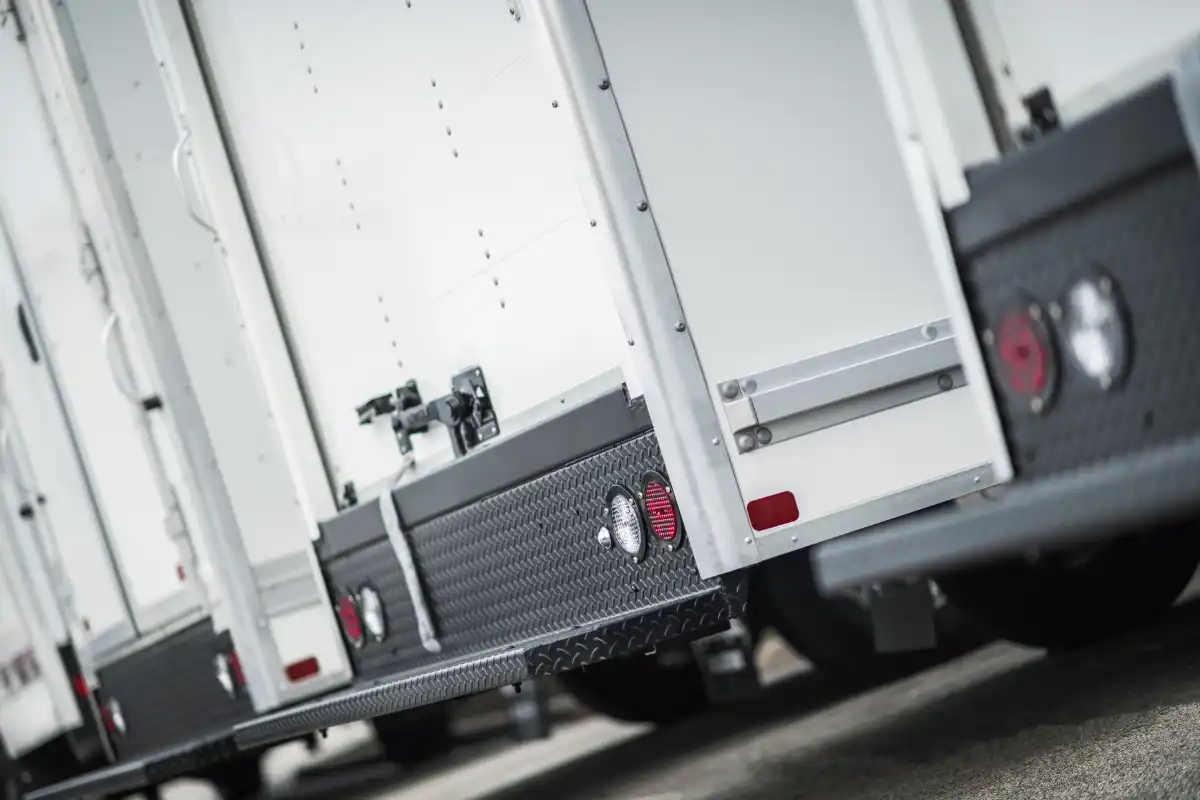
For fleet managers across industries, replacement parts selection means balancing the relative cost, reliability, and availability for original equipment manufacturer (OEM) components and their aftermarket alternatives. Making the right choices starts with software that helps teams track parts performance, monitor failure patterns, and provide cost-benefit analysis for strategic decision-making.
Key takeaways
- Strategic inventory decisions require data, not guesswork: Fleet management software tracks parts performance, life cycle costs, and inventory levels to help choose between OEM and aftermarket based on comprehensive data rather than assumptions
- Vehicle age, component criticality, and warranty status drive parts selection: Use OEM parts for safety-critical systems and warranty-protected vehicles, then transition to proven aftermarket alternatives as fleets age and protection expires
- The aftermarket offers significant savings but requires careful evaluation: Quality aftermarket options exist for most applications, but tracking performance data ensures reliability while controlling costs
The first step is understanding the differences between OEM and aftermarket parts, including their positions in the replacement parts market and their benefits and trade-offs.
What are original equipment manufacturer (OEM) parts?
OEM parts are the components, both on and inside a vehicle, that the company first produced when the vehicle was new.
In the past, auto manufacturers produced all the parts that went into their products, so they were the source of all OEM parts. Because of the complexities of modern car design and intricacies of the automotive business, automakers commonly contract out production of some parts. In those cases, the company that produced the part under contract serves as the source of OEM parts, not the car company itself.
Why OEM parts are better for fleet management
When you go with OEM parts, the same company that made the originals makes OEM parts, so they maintain the exact specifications your fleet needs, removing a long list of unknowns from the equation.
You never have to ask yourself if the replacement part:
- Comes in the right size and fit
- Meets the same level of quality
- Delivers the same performance
- Includes a good warranty
For example, that replacement hose is the exact right length and diameter. The new alternator lines up perfectly with the brackets, and the cables locate in positions that make installation easier without your maintenance techs relying on on-the-spot workarounds.
Because the new part is an exact twin of the part you’re replacing, you know you’re getting the same level of performance you saw when the vehicle was new. OEM parts also tend to come with better warranties backed by the companies that produce the vehicle.
As vehicles become more complex, there’s more reason to rely on OEM. Modern fleet vehicles incorporate advanced telematics systems, electronic control units, and sensor networks that require precise compatibility. OEM parts help you ensure these systems continue to communicate and function as designed, maintaining the integrated performance of increasingly sophisticated fleets.
Why OEM parts are not always better for fleet management
As a manager in an asset-heavy industry, you’re always looking for ways to control costs, and OEM parts cost more upfront. Only looking at the price tag, a part by the original manufacturer costs more than a similar aftermarket part. You might be paying more in other ways, too. Generally, OEM parts take more time to track down, especially for older vehicles. Time quickly adds to the costs. The longer a vehicle sits in the garage waiting on parts, the more money you’re spending on OEM.

The team’s time is valuable, too. With the aftermarket, you are more likely to find one or two vendors who carry all the parts you need. With OEM, you need to develop and maintain a larger network of contacts to track down parts. The time you spend making phone calls and writing emails adds up.
The counterargument here is the total cost of ownership (TCO). OEM parts, with their claims on better fit and quality, may be more expensive only at first.
The aftermarket prices that are easier to find and cheaper to buy can end up costing you more with long-term hits to performance and reliability. The idea here is you get what you pay for.
What are aftermarket parts?
Once you know about OEM parts, aftermarket parts are easy to understand. They’re the opposite of OEM parts.
In many cases, aftermarket companies design their parts to fit a variety of makes and models. So, an automaker might manufacture an OEM windshield wiper blade for a specific make, model, and year. An aftermarket company has a blade that works with that specific vehicle but also many other makes, models, and years.
These types of parts are popular, and the aftermarket continues to expand rapidly, projected to reach $756 billion by 2032 at a 6% compound annual growth rate.
Why aftermarket parts are better than OEM
Aftermarket parts cost less money than OEM parts for a variety of reasons.
When an automaker develops a new part, they invest heavily into design and testing for durability and safety. The pricing reflects those costs. The aftermarket makes a narrower investment. It only makes specific, reverse-engineered parts spread across a wider number of makes and models. There’s less for the aftermarket to recoup and more scale toward individual parts.
Aftermarket parts are not just cheaper. Sometimes, they’re better. There are times when the aftermarket is faster at addressing design flaws found in original parts.
According to industry fleet managers, aftermarket manufacturers sometimes identify and fix design weaknesses more quickly than OEMs. A few years back, some pickup fleets experienced fuel gauge problems because of how the fuel sending unit was designed. The aftermarket had already identified the problem and developed an improved solution, allowing fleet managers to switch to a more reliable component.
Similarly, in some cases aftermarket companies have re-engineered weak areas in OEM parts. When fleets experienced frequent belt tensioner failures, the bearing itself wasn’t sufficient to support the load. The aftermarket responded and put in a more robust bearing, which solved a lot of problems.
Why aftermarket parts might not be right for your fleet
Aftermarket parts cost less, but they do come with trade-offs. Instead of getting something purpose-built for your specific vehicle, you might have to settle for a part with a universal fit. The difference resembles choosing between a tailor-made suit that fits you perfectly and only you, versus something bought off the rack.
The main drawbacks of aftermarket parts include:
- Less compatibility
- Shorter likely life spans
- More restrictive warranties
Because the quality of materials and workmanship can also be lower, an aftermarket part may not last as long. Unlike an OEM part, aftermarket parts have less generous warranties. In some cases, they don’t have any.
When to use OEM instead of aftermarket parts
Instead of locking yourself into one or the other, you can best control costs by setting up a system to help you decide case by case. Sometimes, OEM makes more sense. Other times, an aftermarket part delivers the most value.
Key factors to evaluate include warranty and insurance requirements, component criticality, vehicle age, and data-driven cost analysis.
OEM with warranties and insurance
Before trying to decide, check to see if someone has already made the decision for you. In some cases, your existing warranties and insurance dictate which type of parts are possible.
For example, if a vehicle is still under warranty with the OEM, they’re going to use OEM parts. If the repairs are part of an insurance claim, the policy might have requirements for parts.
OEM for critical components
You can choose between OEM and aftermarket based on how critical the part is to the vehicle’s reliable and safe operation. So, if you need to replace the floor mats in a truck, you can go with an aftermarket solution. But for the radiator, it might make more sense to use OEM.
Remember, OEM costs more at first, but you are more likely to save money in the long run because of better performance and reliability. For non-critical parts, that’s never going to be much of an issue. But for the parts that keep your fleet on the road, TCO is often lower with OEM.
Aftermarket for older vehicles
As your fleet ages, it makes sense to gradually switch to aftermarket parts.
One of the advantages of OEM parts is that you trust them to return your vehicles to like-new performance. In theory, your replacement fuel pump has that part of the engine working just like it did when it was fresh off the assembly line. But is it worth the cost when the rest of the engine is already showing its age?
Even if you could see a real boost in performance from that old engine, it’s not going to be around for long. There’s no reason to use a new part that comes with a five-year warranty when the vehicle has only two more years of useful life left in it.
In the end, even if you decided it was worth the money to use OEM on older vehicles, the market might make it impossible. The older your fleet gets, the harder it is to find OEM parts. Even when you do, the time it takes to find and ship them means more downtime.
How fleet management software supports smarter parts inventory management
Fleet managers who succeed in balancing quality and cost take a systematic, data-driven approach to parts decisions. Modern fleet management software puts comprehensive data at your fingertips, letting you move beyond guesswork and outdated spreadsheets.
Defining the steps in broad strokes, you can start by categorizing fleet components into three tiers.
- Tier one: Include safety-critical and warranty-protected systems that require OEM parts
- Tier two: Covers important systems where high-quality aftermarket alternatives have proven reliable
- Tier three: Encompasses commodity parts where aftermarket options consistently deliver adequate performance at significant savings
From there, track performance metrics for each category. Monitor failure rates, replacement frequency, labor hours for installation, and total cost per mile for different part types. When six months or a year of data accumulates, patterns emerge that guide purchasing strategy.
Track parts performance and life cycle data
With asset management analytics, analyze parts performance across the entire fleet. Track which parts fail most frequently, how long different components last, and whether OEM or aftermarket replacements provide better value for specific applications.
Build a comprehensive performance database by monitoring:
- Failure rates for each component type
- Average service life before replacement
- Installation labor hours and complexity
- Total cost per mile for different part types
- Warranty claim frequency by manufacturer
When the data shows that a particular aftermarket brake pad consistently lasts for only 85% of the time as the OEM version but costs 60% less, the math becomes clear. The aftermarket option delivers better value for non-critical components, especially when savings multiply across a large fleet.
Optimize inventory based on real usage patterns
Parts inventory management tools help maintain the right balance of OEM and aftermarket parts. Track usage patterns and adjust stock levels based on actual consumption data instead of guesswork or outdated forecasts.
Analyze inventory data to determine:
- Which OEM parts to stock for critical, time-sensitive repairs
- Which aftermarket alternatives move quickly enough to justify bulk orders
- Optimal reorder points based on actual consumption rates
- Seasonal variation in parts demand across the fleet
With real-time inventory tracking and barcode scanning, you always know what’s available. When a technician needs a part, immediately see whether it’s in stock, where it’s located, and whether an OEM or aftermarket version is available. Streamline ordering through integrated vendor management, making it easy to quickly source OEM parts when needed while maintaining relationships with reliable aftermarket suppliers for routine replacements.
Schedule preventive maintenance strategically
Preventive maintenance scheduling capabilities transform how fleet managers plan repairs and manage parts availability. Build a proactive maintenance strategy that aligns parts procurement with scheduled service windows, scheduling maintenance when aftermarket parts arrive rather than paying premium prices for rush OEM deliveries.
- Develop a strategic maintenance calendar by coordinating:
- Scheduled service intervals with parts lead times
- Aftermarket part delivery schedules with available maintenance windows
- OEM component replacement with manufacturer-recommended intervals
- Bulk maintenance operations to maximize technician efficiency
Track lead times for both OEM and aftermarket suppliers meticulously. When data shows that a specific aftermarket supplier consistently delivers brake rotors in three days while OEM versions take two weeks, schedule brake service to accommodate the faster, more cost-effective option. Build supplier performance into maintenance planning, avoiding costly vehicle downtime by aligning service windows with realistic parts availability.
Configure automated maintenance schedules that ensure critical OEM components get replaced at manufacturer-recommended intervals. Maintain warranty compliance and safety standards by never extending service intervals on safety-critical systems. For less critical systems, leverage flexibility to optimize costs. When aftermarket parts prove reliable through performance tracking, extend replacement intervals based on actual wear data rather than conservative OEM recommendations.
Use cases, including related features and concrete steps, for deciding between OEM and aftermarket parts
By combining specific performance analytics, real-time inventory tracking, and integrated vendor management capabilities, fleet managers across industries can make data-driven decisions that reduce maintenance costs, optimize parts inventory levels, and eliminate costly emergency repairs while maintaining equipment reliability and safety compliance.
Construction fleet manager leverages parts performance analytics to cut maintenance costs
Imagine you manage a construction fleet of 47 excavators, bulldozers, and dump trucks scattered across three active job sites. Last quarter, your maintenance budget increased by 30%, but traditional spreadsheet tracking couldn’t identify the root cause.
Your mechanics continued ordering replacement hydraulic hoses at inconsistent intervals. Some equipment required new hoses every six months while identical machines operated for eighteen months between failures. You needed concrete data to understand these performance discrepancies.
You deploy asset management analytics to build a comprehensive performance database that tracks failure rates, average service life, installation labor hours, and total cost per operating hour for different component types. Every time your mechanics replace a part, you have them log it through barcode scanning, automatically capturing installation dates, labor costs, and warranty information.
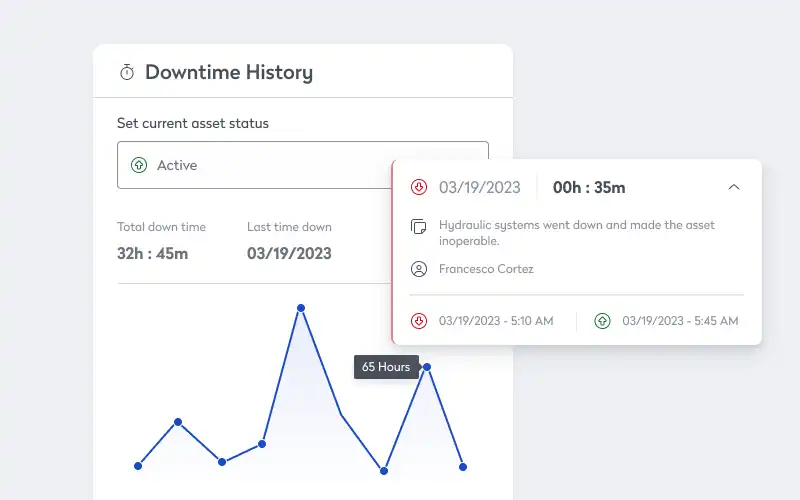
Within three months, you analyze the data and discover that aftermarket hydraulic hoses fail at nearly twice the rate of OEM parts but cost 65% less. Drilling deeper into the segmented data, you uncover a critical distinction: equipment operating in the quarry’s abrasive environment experiences aftermarket hose failures after only four months, while identical aftermarket hoses on dump trucks running paved routes perform reliably for fourteen months.
You then use integrated cost management tools to calculate total cost per mile for each scenario, proving that OEM hoses deliver superior value in harsh environments despite higher upfront pricing.
From there, you configure automated rules within the asset life cycle tracking system that recommend part types based on specific vehicle applications, usage patterns, and historical performance data. Equipment assigned to abrasive quarry work receives OEM hoses automatically, while road-running trucks default to cost-effective aftermarket alternatives.
You also set up automatic alerts for when vehicles transition from warranty coverage to independent maintenance, enabling you to shift from mandatory OEM parts to proven aftermarket options at precisely the optimal moment.
Because you’re documenting cases where aftermarket parts exceed OEM longevity in specific applications, you can negotiate volume pricing with suppliers who consistently deliver quality components. Over the next six months, your maintenance budget decreases while equipment reliability improves.
Municipal fleet optimizes inventory management and reduces parts stock
Now you’re overseeing 130 vehicles for a municipal government, including police cruisers, sanitation trucks, fire engines, and general service sedans, but there’re a consistent mismatch between what you have and what the fleet needs because your predecessor managed inventory based on intuition and generic manufacturer recommendations designed for fleets with completely different operational profiles.
For example, the parts room contains ten cases of brake rotors for Crown Victorias that the city retired three years ago and a single oil filter for a specialized fire truck, ordered eighteen months ago at premium rush pricing, still unused in its packaging. Meanwhile, mechanics spend hours each week waiting for common parts that should be readily available.
So, you implement a modern parts inventory management system and immediately start analyzing consumption data to reveal distinct patterns invisible in annual summary reports. You discover that police cruisers consume brake pads at three times the civilian vehicle rate due to constant idling and rapid acceleration patterns. Sanitation trucks require air filter replacement every six weeks during fall leaf season but maintain the same filters for four months during summer operations.
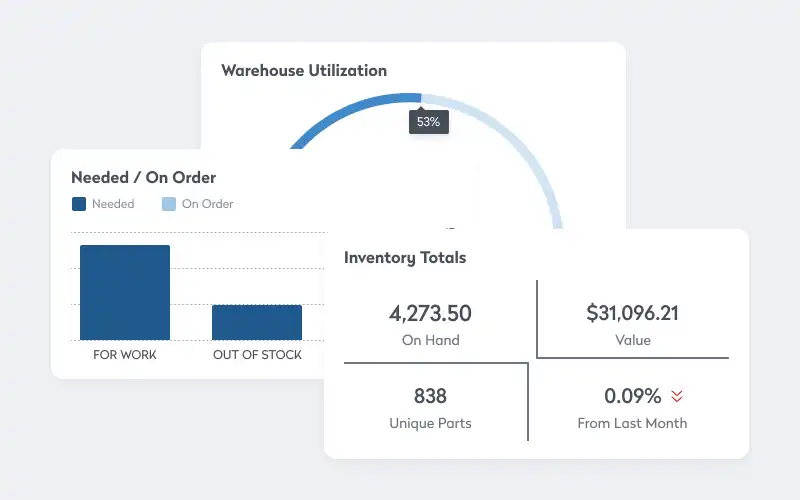
You configure the cloud-based platform to analyze historical usage data and set minimum and maximum stock levels based on actual consumption rates rather than arbitrary estimates.
For high-velocity parts like aftermarket oil filters, you use the data to justify bulk ordering that captures cost savings through volume pricing. For slow-moving specialty components required for fire apparatus, you establish expedited ordering protocols with OEM suppliers instead of tying up capital in rarely used parts that risk obsolescence.
You also leverage the unified vendor management module to create scorecards that objectively track delivery times, quality issues, and pricing competitiveness across all suppliers. You analyze the data and discover that a larger aftermarket supplier averages eleven-day delivery times with three incorrect shipments last quarter, earning them secondary vendor status despite preferential treatment from city council. A smaller supplier consistently delivers accurate orders in four days with zero errors, so you award them preferred status and more inventory commitments.
You also use real-time inventory tracking to determine which OEM parts to stock for critical, time-sensitive repairs, and which aftermarket alternatives move quickly enough to justify bulk orders.
To improve overall data capture, you also equip your technicians with barcode scanning integration so they can instantly verify parts availability, location, and whether OEM or aftermarket versions exist in stock. Parts inventory shrinks while parts availability for actual maintenance needs improves substantially.
Delivery fleet manager eliminates emergency repairs with strategic preventive maintenance scheduling
Imagine you’re in charge of logistics for a regional delivery company with 83 vans operating under tight delivery schedules. Every vehicle undergoing unplanned maintenance represents $400 in daily lost revenue.
Yesterday, three vans required unscheduled brake service when mechanics discovered worn rotors during routine inspections. Your OEM parts distributor initially promised a two-day delivery but called this morning to report a five-day delay due to supplier shortages. Those vans remain idle while dispatch scrambles to cover routes with backup vehicles already operating beyond recommended service intervals.
You implement a comprehensive preventive maintenance scheduling platform and immediately set it up to automatically track supplier lead times. You discover that your preferred aftermarket brake supplier maintains a consistent 72-hour delivery window while delivering 55% cost savings compared to OEM pricing.
You configure the software to monitor brake wear data across the entire fleet through asset management analytics, allowing you to predict service requirements three weeks in advance based on actual usage patterns and component wear rates.
For next Tuesday’s scheduled brake service covering five vans, you place aftermarket parts orders today through integrated vendor management, ensuring components arrive Friday with time to verify quality before the service window. You then schedule the vans to enter the bay Monday evening, receive new brakes Tuesday morning, and return to revenue-generating routes by afternoon.
You also leverage the modern fleet management platform to handle more complex life cycle requirements beyond routine maintenance.
For example, you use automated maintenance schedules to ensure critical OEM components like steering assemblies reach manufacturer-recommended replacement intervals at 90,000 miles, maintaining insurance coverage requirements and safety compliance.
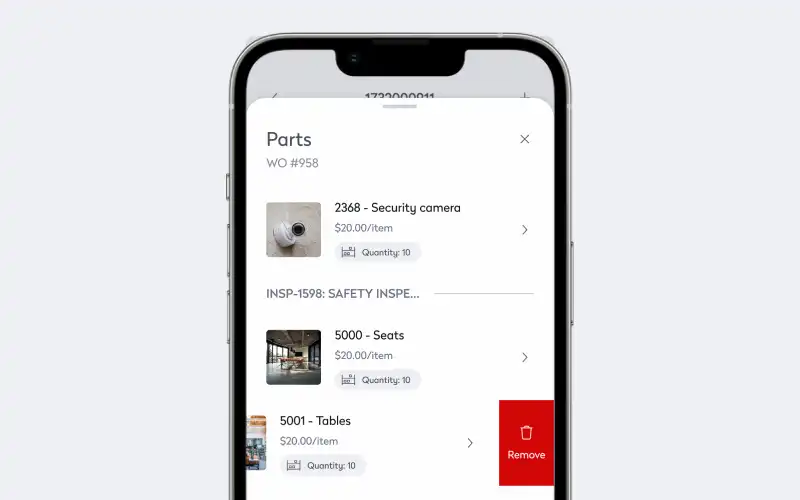
You configure the centralized system to generate work orders automatically, link them to pre-verified parts inventory, and assign technicians with appropriate certifications.
For less critical systems like air conditioning, you analyze your performance tracking database and discover that aftermarket compressors match OEM longevity at half the cost. So, you extend replacement intervals from conservative manufacturer recommendations to data-driven schedules based on actual wear patterns observed across your specific operating conditions.
Now instead of vehicles sitting idle awaiting parts, you align scheduled maintenance windows with confirmed parts availability and technician capacity, optimizing both asset utilization and maintenance efficiency.
Transportation logistics provider saves $60K with inspection improvements and proactive maintenance strategy
A global leader in transportation, logistics, materials handling, and industrial services, with operations spanning the U.S., Canada, Mexico, and Saudi Arabia, recognized the need to transform its maintenance approach.
With a fleet of assets across over 200 locations and more than 4,000 employees, the company aimed to shift from reactive breakdowns to proactive asset management that would control costs and enhance operational reliability.
The organization faced significant challenges with its home-grown maintenance program struggling to keep pace with rapid growth. Breakdown and repair costs were skyrocketing, threatening efficiency and profitability.
Managing assets across more than 200 locations without centralized visibility or standardized processes led to inconsistent maintenance practices. The lack of comprehensive data impaired executive decision-making, making it difficult to allocate resources effectively or plan for future needs.
The company implemented Eptura Asset, deploying a comprehensive maintenance platform that enabled preventive maintenance and inspection programs across all locations. Maintenance crews gained mobile access to complete work orders and inspections on the go.
They introduced a strategic 20-point asset service inspection designed to catch potential issues early and reduce costly breakdown repairs. The company created an innovative incentive program for mechanics focused on on-time metrics for preventive, reactive, and inspection tasks.
Leveraging system data, they built a proprietary scorecard offering unprecedented operational insights.
After implementation, they realized:
- $60,000 saved in the first year from the inspection program alone
- Significant cost reduction through early issue detection and fewer breakdown repairs
- Substantial increase in adoption rates and workforce empowerment
- Unparalleled operational insights through data-driven scorecards
The transformation allowed them to move beyond firefighting breakdowns, turning maintenance into a strategic advantage that not only achieved impressive cost savings but also solidified their reputation as an industry leader committed to operational excellence.
Learn how unified maintenance operations across 200+ locations into a single, data-driven system.
Balance OEM and aftermarket parts with data-driven decision-making
The choice between OEM and aftermarket parts represents a strategic decision that affects fleet performance, reliability, and costs. OEM parts deliver precise fit and guaranteed performance but command higher prices and longer lead times. Aftermarket alternatives offer cost savings and broader availability, though quality varies across manufacturers.
Modern fleet management software eliminates the guesswork from this decision by providing comprehensive performance analytics, real-time cost tracking, and historical data across your entire fleet. Instead of relying on manufacturer claims or industry generalizations, you can analyze actual failure rates, service life, and total cost per mile for both OEM and aftermarket components in your specific operational environment.
Modern solutions deliver insights into parts and people. Integrated vendor management tools let you compare supplier reliability, delivery times, and pricing competitiveness objectively, while automated inventory systems ensure you maintain optimal stock levels for both part types based on actual consumption patterns.
Armed with a data-driven approach, you can optimize the balance between reliability, availability, and expense across your entire operation.
Frequently asked questions

By Jonathan Davis
As a content creator at Eptura, Jonathan Davis covers asset management, maintenance software, and SaaS solutions, delivering thought leadership with actionable insights across industries such as fleet, manufacturing, healthcare, and hospitality. Jonathan’s writing focuses on topics to help enterprises optimize their operations, including building lifecycle management, digital twins, BIM for facility management, and preventive and predictive maintenance strategies. With a master's degree in journalism and a diverse background that includes writing textbooks, editing video game dialogue, and teaching English as a foreign language, Jonathan brings a versatile perspective to his content creation.